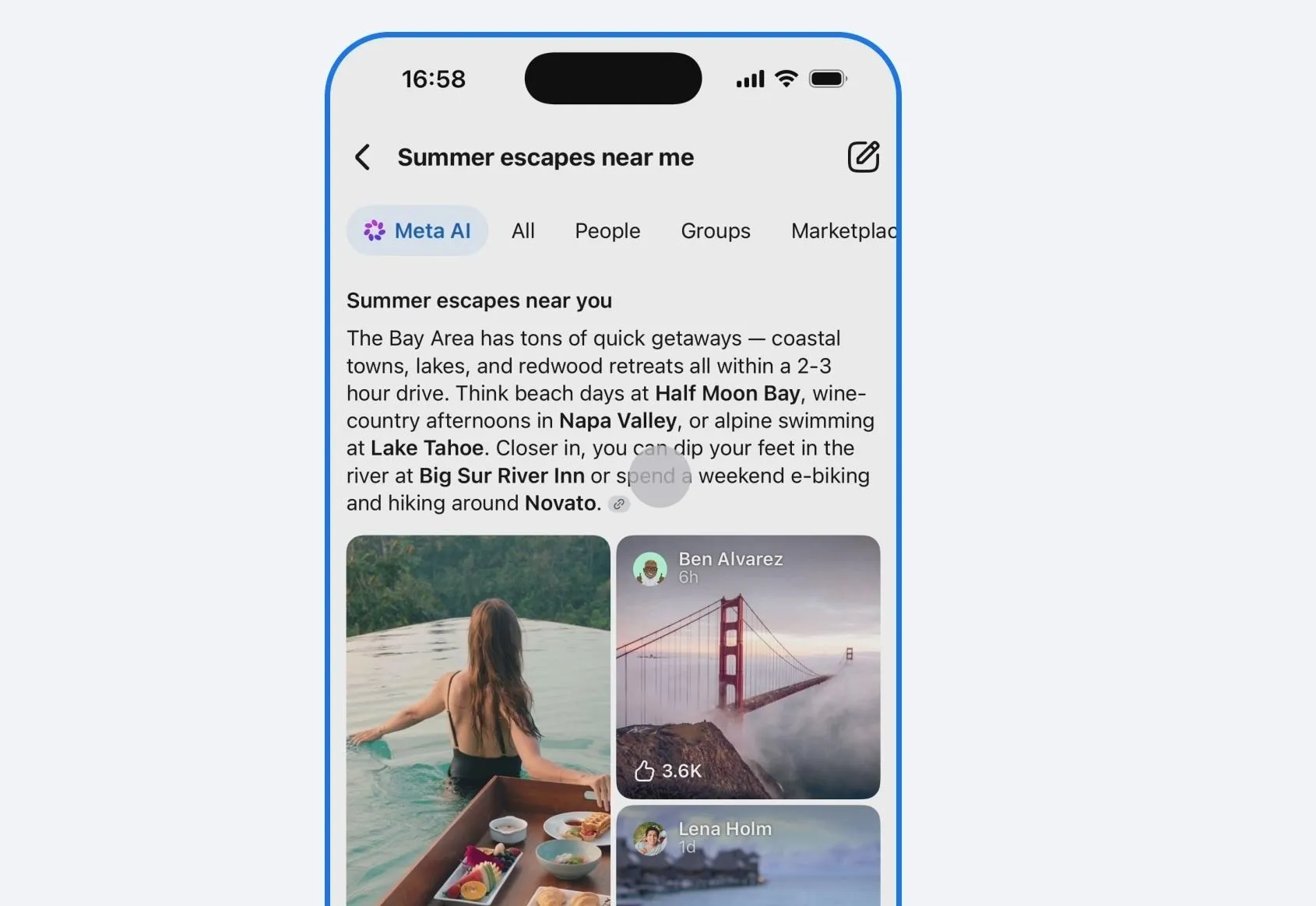
In a game-changing development for online search, Meta has launched its innovative AI Mode on Facebook, utilizing insights from users' public posts to generate enhanced results. This new feature, launched today, marks a significant shift in how users engage with the platform, moving beyond the traditional search functionalities.
When users initiate a search on Facebook, the new AI Mode option will appear alongside familiar categories such as 'People' and 'Marketplace.’ This feature is one of several new AI-driven tools that Meta is rolling out, which also includes novel photo presets allowing users to virtually don sports jerseys of their favorite teams and personalized collage templates.
Unlike conventional search results that typically display static links, the AI Mode delivers dynamic, AI-generated answers based on publicly available content across Meta's expansive ecosystem, which includes Facebook, Instagram, and Threads. Users can engage with Meta's AI, referred to as Muse Spark, by posing follow-up questions to refine their searches further, reflecting a more conversational approach to information retrieval.
In a parallel ambition, tech giant Google has also drawn from the wealth of user-generated content on platforms like Reddit to enhance its own search capabilities. Meta’s recent announcement emphasizes that its AI Mode aims to 'provide answers grounded in what people are saying publicly' across its applications, presenting a compelling alternative to traditional search methods.
As Meta continues to evolve its AI offerings, the Muse Spark model is designed to expand over time. Future updates are expected to include features that will further integrate user-generated content and recommendations from across its platforms. This strategic move not only enhances user experience but also raises important questions about privacy and the role of public contributions in shaping AI-driven responses.
As Meta implements these transformative changes, users will be keenly watching how their own public posts contribute to the AI's output and what implications this has for digital privacy in an increasingly interconnected world.
Source: The Verge
Source: The Verge