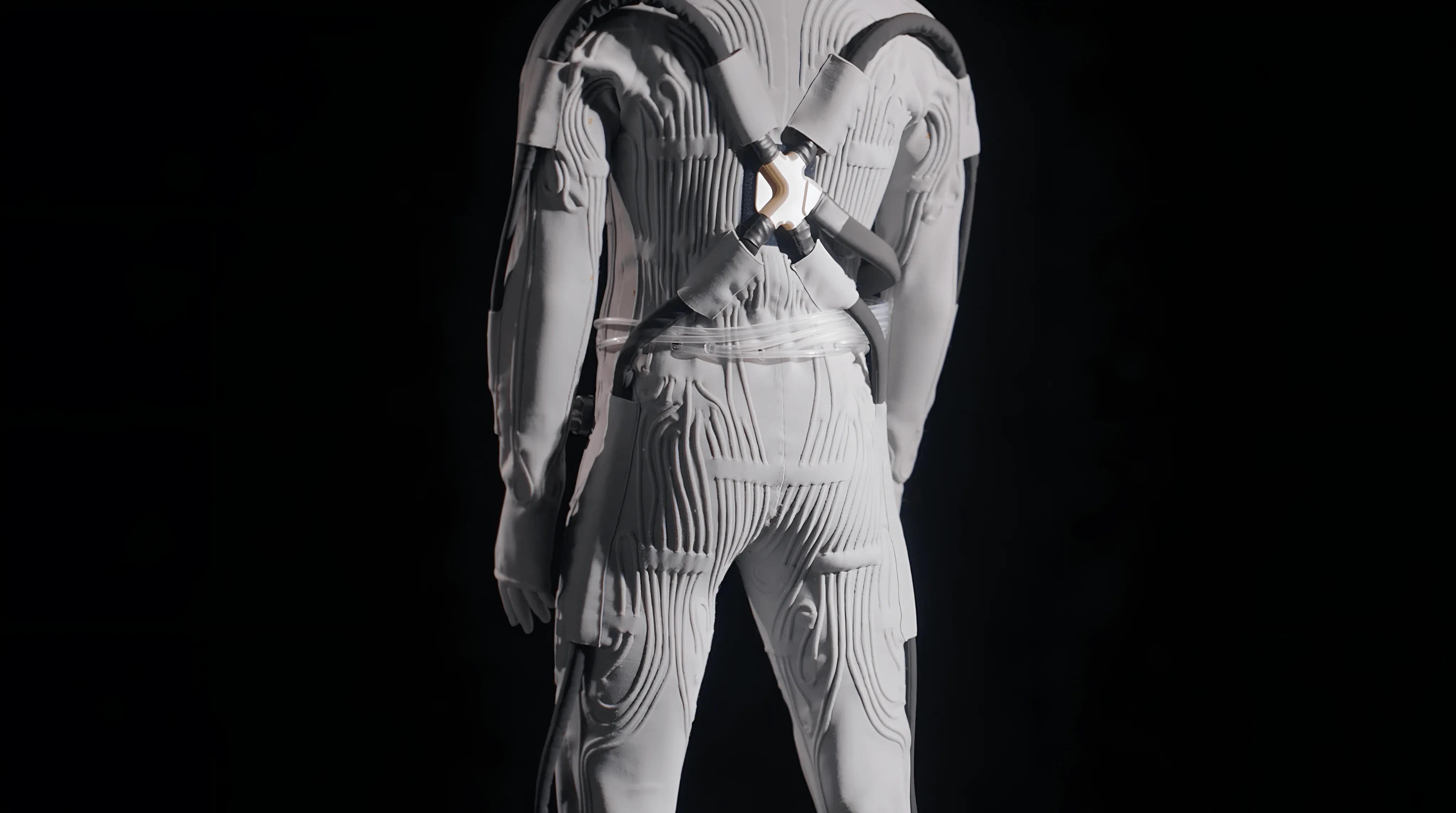
In a groundbreaking fusion of cutting-edge technology and high fashion, NASA is set to equip its astronauts with a revolutionary Liquid Cooling and Ventilation Garment (LCVG), designed in collaboration with luxury brand Prada. As part of the Artemis IV mission scheduled to return humans to the Moon in 2028, this high-tech undergarment aims to provide astronauts not just with comfort, but essential temperature regulation during their cosmic endeavors.
Advancing Astronaut Comfort and Safety
The LCVG will serve as a critical base layer for astronauts, enhancing the functionality of the Axiom Extravehicular Mobility Unit (AxEMU) spacesuit. Utilized primarily for spacewalks, it features a series of embedded tubes that circulate cold water, effectively whisking away excess body heat and ensuring that crews remain cool under the intense conditions of space.
Unlike previous cooling systems, the LCVG includes a redundant backup system designed to maintain astronaut safety even in the event of a primary failure. This innovation is complemented by an integrated ventilation mechanism that supplies fresh oxygen to the AxEMU helmet and channels exhaled carbon dioxide to a scrubber for recirculation, highlighting a significant step forward in life-support systems.
A History of Innovative Collaborations
This partnership between Axiom Space and Prada marks a notable evolution in NASA's approach to astronaut apparel. The space agency has a history of merging advanced materials science with striking design aesthetics, previously exemplified by the BioSuit concept developed with contributions from MIT professor Dava Newman and acclaimed architect Guillermo Trotti.
The LCVG is poised to redefine what astronauts can expect from their gear, illustrating how partnerships between unlikely allies can lead to groundbreaking advancements in space exploration. As we edge closer to the next lunar landing, all eyes will be on how these stylish yet functional garments perform in the harsh environment of the Moon.
For more information, visit the original article here.
Source: The Verge