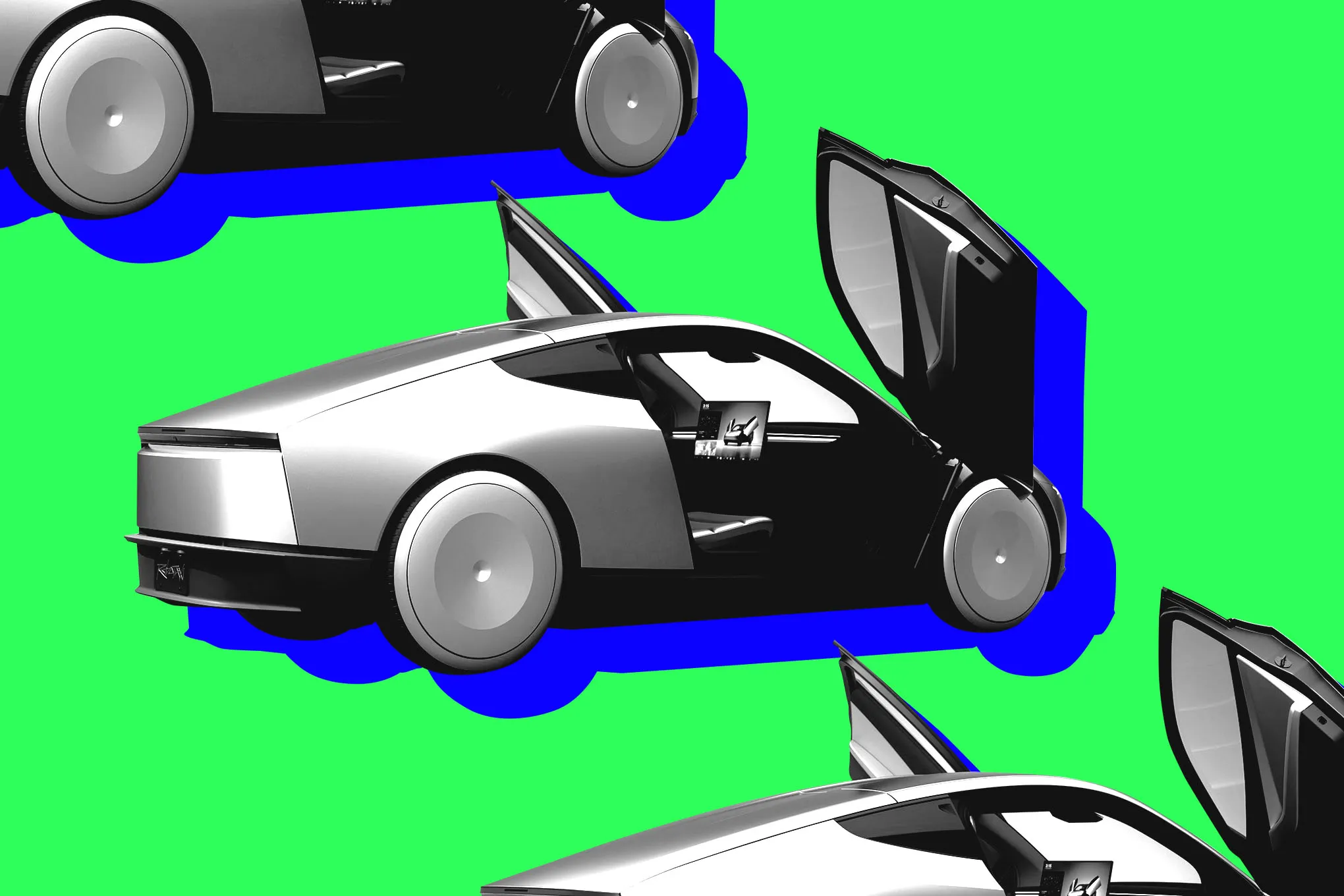
The much-anticipated Tesla Cybercab is officially in production, marking a pivotal moment in the company's quest to revolutionize urban transport. Despite some uncertainty regarding its operational strategies, Elon Musk's pioneering automaker is taking significant steps to legitimize this autonomous marvel, recently submitting crucial specifications to the Environmental Protection Agency (EPA).
According to the filings, the Cybercab emerges as Tesla's most efficient and lightest electric vehicle to date, boasting astonishing specifications that may set new industry benchmarks. Operating with a single front-mounted 219 horsepower permanent magnet motor, the Cybercab achieves a curb weight of just 3,113 pounds—a remarkable feat that positions it approximately 700 pounds lighter than the existing Model 3.
Unmatched Efficiency and Range
What sets the Cybercab apart is its groundbreaking efficiency. Touted as the most energy-efficient EV currently available, the Cybercab achieves a stunning rating of 165 watt-hours per mile (Wh/mi). This remarkable efficiency allows it to travel nearly six miles on a single kilowatt-hour of power, eclipsing the Lucid Air, previously regarded as the leader in the sector at 230 Wh/mi.
The Cybercab's compact 48 kWh battery pack not only enhances its efficiency but also contributes to its lightweight design, a rarity among electric vehicles, which often incorporate larger battery packs to reach ranges exceeding 300 miles. Initial EPA estimates project a theoretical range of 418 miles, although real-world testing is expected to adjust this figure to about 290-300 miles—a target Tesla has publicly aimed to achieve.
Roadmap and Challenges Ahead
Despite the promising specifications, the operational roadmap for the Cybercab remains nebulous. Currently, Tesla operates fewer than 60 Model Y robotaxis in limited Texas markets, significantly less than the ambitious rollout plans Musk announced for broader availability across the U.S. by the end of 2025. The company is actively pursuing permits for launches in Las Vegas and various cities in Florida, yet no official timeline has been established for the Cybercab's entry into service.
As Tesla moves forward, the potential of the Cybercab appears poised to reshape perceptions on urban mobility, harnessing advanced technology while delivering enhanced efficiency. However, questions linger as to how quickly this vision will become a reality in real-world applications.
Source: The Verge
Source: The Verge